How to Become an Aesthetic Practitioner in the UK
Posted on: May 15, 2026

Posted on:
Interest in aesthetic medicine has grown substantially over the past decade. For many medical professionals, doctors, dentists, nurses, and pharmacists among them, transitioning into facial aesthetics represents a genuinely rewarding career move, both clinically and financially. But the question we hear most often is a deceptively straightforward one: how do you actually become an aesthetic practitioner?
The answer depends heavily on where you are in your medical career, what your existing qualifications are, and, critically, what kind of aesthetic practitioner you want to be. In the UK, the regulatory environment around aesthetics has been tightening, and for good reason. At the Dr Bob Khanna Training Institute, we have been training medical professionals since 1997, and in that time we have seen what separates practitioners who go on to build safe, successful, long-term aesthetics practices from those who struggle. It comes down to the quality of the foundation.
This guide covers everything you need to know about how to become an aesthetic practitioner in the UK, including the medical prerequisites, the training pathway, the accreditations worth pursuing, and what life looks like after your first course.
What is an aesthetic practitioner?
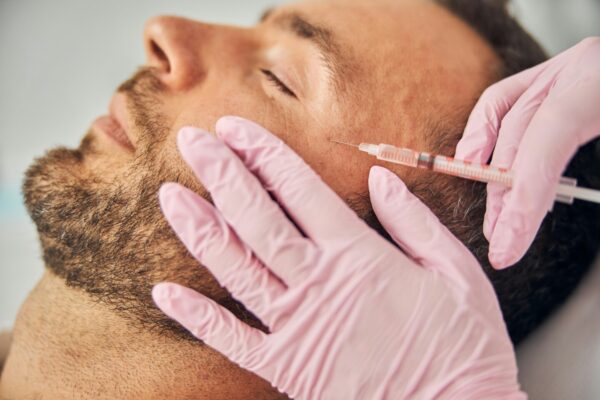
An aesthetic practitioner is a clinical professional who delivers non-surgical cosmetic treatments, typically injectables such as Botulinum Toxin (BTX, commonly known by brand names such as Botox) and dermal fillers, as well as treatments like thread lifts, polynucleotide therapy, mesotherapy, and skin rejuvenation.
The term covers a broad spectrum: from newly qualified nurses who have completed a beginner-level BTX course, to internationally recognised clinicians who train practitioners from across the globe. What they share is a commitment to non-surgical facial enhancement, improving patient confidence through carefully administered treatments that work with, rather than against, the natural architecture of the face.
In the UK, the aesthetic industry is not yet subject to a mandatory statutory licensing scheme in the same way medicine or dentistry are. However, significant regulatory reform has been underway, and the sector is moving increasingly towards a model where only regulated healthcare professionals, and those working under their direct supervision, can legally administer certain prescription-only medicines such as Botulinum Toxin.
Who can become an aesthetic practitioner in the UK?
At accredited, reputable training institutes in the UK, including the Dr Bob Khanna Training Institute, aesthetics training is exclusively available to regulated medical professionals. This is not a bureaucratic formality. It reflects a genuine clinical reality: aesthetic treatments carry real risk and managing that risk requires an existing medical foundation.
The following professionals are eligible to train with us:
- Doctors (GMC registered) – View aesthetic courses for doctors
- Dentists (GDC registered) – View aesthetic courses for dentists
- Nurses (NMC registered) – View aesthetic courses for nurses
- Pharmacists (GPhC registered) – View aesthetic courses for pharmacists
- Midwives (NMC registered) – View aesthetic courses for midwives
- Dental hygienists and dental therapists (GDC registered) — View aesthetic courses for dental hygienists and therapists
Each of these professions brings a relevant clinical skillset, anatomical knowledge, injection technique, patient assessment, and the ability to recognise and manage complications. These are not skills that can be compressed into a weekend course for someone with no medical background. They are the accumulated product of years of clinical education.
A note on prescribing: the administration of Botulinum Toxin requires a valid prescription. In England, following legislative changes from 2021 onwards, prescriptions for aesthetic procedures may only be issued following a face-to-face consultation with an appropriate prescriber. If you are not an independent prescriber yourself, you will need to work within a prescribing framework, something our team can advise you on during your training.
Can you become an aesthetic practitioner without a degree?
This is one of the most frequently searched questions on the topic, and it deserves an honest answer.
The short answer is: not safely, and not within the framework of reputable UK training providers.
There are courses available in the UK that claim to train individuals with no medical background. Some operate in a legal grey area; others are simply unregulated. The treatments they teach, dermal fillers in particular, involve injecting substances into facial tissue in close proximity to major blood vessels. Vascular occlusion, where filler inadvertently blocks blood flow to critical structures including the eyes, is a rare but documented complication that can cause permanent blindness or skin necrosis. Managing these events requires the kind of clinical decision-making, pharmacological knowledge, and emergency response capability that only a regulated medical professional possesses.
The Henry Review (2021) and subsequent UK Government guidance made clear that administering Botulinum Toxin and dermal fillers should be restricted to, or carried out under the supervision of, regulated healthcare professionals. Choosing an unaccredited provider that accepts non-medical delegates may expose both you and your future patients to significant risk.
If you are a medical professional who does not yet hold a fully registered qualification, for example a student nurse nearing completion of your training, we would encourage you to get in touch to discuss your eligibility once you have registered with your regulatory body.
If you are not currently working within the medical profession but are drawn to aesthetics as a career, the honest pathway is to first pursue a qualifying medical profession. Nursing, in particular, offers a route that many successful aesthetic practitioners have taken, completing a nursing degree, gaining clinical experience, and then moving into aesthetics training with a genuinely solid foundation.
Step-by-step: the training pathway to becoming an aesthetic practitioner
For medical professionals ready to begin their aesthetics journey, here is a clear, realistic breakdown of the pathway from first interest to treating patients independently.
Step 1: Confirm your eligibility. Ensure you are registered with your relevant regulatory body (GMC, NMC, GDC, GPhC, or equivalent) and that your registration is current and in good standing. You should also hold appropriate indemnity insurance that covers aesthetic procedures. Providers such as Hamilton Fraser, a training course partner of ours, offer specialist aesthetic indemnity policies.
Step 2: Choose an accredited training provider. Look for a provider that is Save Face accredited and approved by the Royal Society for Public Health (RSPH). The Dr Bob Khanna Training Institute was the first aesthetics training provider in the UK to receive RSPH approval. Check that courses are taught by a recognised clinical expert. All our training is delivered directly by Professor Bob Khanna, who has nearly 30 years of experience in facial aesthetics training.
Step 3: Begin with a beginner-level module. For most delegates, the starting point is our aesthetic courses for beginners, which cover the foundations of Botulinum Toxin and/or dermal filler treatment. Courses run for a full day, combining in-depth theory lectures, live demonstrations by Professor Khanna, and hands-on practice with real patients under direct supervision.
Step 4: Build supervised clinical experience. Training does not end when the course does. In the weeks and months that follow, it is essential to build your caseload gradually, ideally with access to ongoing mentorship. Our 24/7 online support forum allows delegates to seek guidance from Professor Khanna and our team of experienced ambassadors as they encounter real-world cases.
Step 5: Progress to advanced training. Once comfortable with foundational treatments, our advanced aesthetics training courses cover the full face across multiple anatomical planes, including midface, lower face, and complex combination treatments. We also offer specialist courses in thread lifting, polynucleotides, skin and hair treatments, and fat reduction.
Step 6: Work towards the QCCP qualification. For practitioners who want to demonstrate the highest level of formal competency, our training pathway supports progression towards the Qualifications in Cosmetic Clinical Practice (QCCP), an RSPH-approved qualification that provides the most robust publicly recognised evidence of clinical standards in UK aesthetics.
Accreditations and qualifications to look for
Not all aesthetics training is created equal. When evaluating providers, these are the accreditations that carry genuine weight in the UK industry.
Save Face Accreditation. Save Face is the national register of accredited practitioners and clinics, endorsed by NHS England, the Department of Health, and major broadcasters. A Save Face Accredited Training Provider has been assessed against the Essential Curriculum and confirmed to meet defined learning and competency standards.
RSPH Approval. The Royal Society for Public Health is one of the UK’s most established public health bodies. RSPH approval of an aesthetics training provider signals a level of educational rigour that goes beyond the industry norm. The Dr Bob Khanna Training Institute was the first aesthetics provider in the UK to receive this recognition.
QCCP Qualification. The Qualifications in Cosmetic Clinical Practice is an RSPH-approved credential that delegates can work towards through our structured training modules. It is increasingly recognised as the benchmark qualification for serious aesthetic practitioners in the UK.
ETCC Provider Status. Excellence in Training, Compliance and Care is a further quality mark that reflects commitment to high standards across the full delegate experience.
The Dr Bob Khanna Training Institute holds all of the above. See our full accreditations and qualifications.
What does aesthetics training actually involve?
This is where the Dr Bob Khanna Training Institute differs meaningfully from many alternatives. Our courses are not online-theory-only programmes, nor are they rushed group sessions where delegates have limited patient contact. Every course is built around three core components.
In-depth theory. Each course opens with a full lecture by Professor Khanna, covering anatomy, pharmacology, patient selection criteria, contraindications, and the clinical rationale behind every technique. This is not background reading. It is clinically specific, practically oriented instruction that directly informs how you treat patients safely.
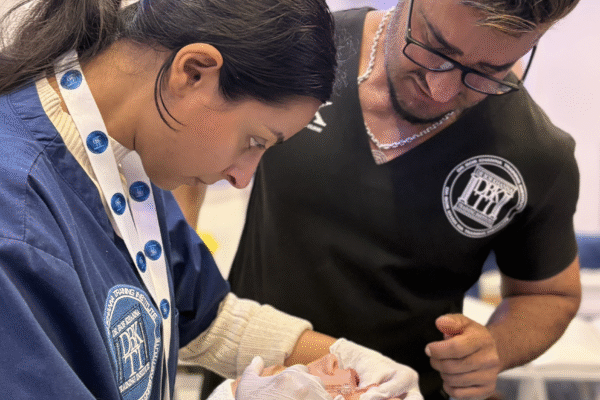
Live demonstration. Professor Khanna then demonstrates treatments on live models, narrating his technique and clinical decision-making in real time. Delegates observe not just the technical movement of the needle but the assessment, the product choice, the placement logic, and the evaluation of the result.
Supervised hands-on practice. Delegates then treat live models themselves under direct supervision. We use ultrasound verification on our courses, a meaningful differentiator that allows both trainers and delegates to visualise anatomical structures in real time, confirming safe needle and cannula placement relative to key vessels. This is particularly valuable for building confidence in new practitioners and ensuring patient safety from the very first treatment.
We deliberately keep class sizes small. This means more time with Professor Khanna per delegate, more hands-on practice, and a learning environment where questions are genuinely welcomed.
Post-course support. All delegates receive a detailed digital post-course information pack and access to our 24/7 online support forum. When you encounter a case you are unsure about, and you will, that forum connects you directly with Professor Khanna and our ambassador team. Read more about our mentoring and support services.
Building your aesthetic career after training
Once you have completed your foundational training and built initial clinical experience, you will face decisions that will shape the kind of aesthetic practitioner you become.
Some practitioners join established aesthetic clinics, benefiting from an existing patient base, clinical governance structures, and a prescribing framework. Others build their own independent practices alongside existing medical work, for example a dentist who dedicates one or two sessions per week to facial aesthetics. There is no universal right answer; it depends on your goals, your working context, and the pace at which you want to grow.
Some practitioners prefer to develop expertise across a wide portfolio, covering BTX, fillers, threads, skin treatments, and body contouring. Others prefer to go deep in a smaller number of treatments, becoming genuinely exceptional at a focused offering. Both models are commercially and clinically valid.
The aesthetics field moves quickly. New products, new techniques, and an evolving evidence base mean that the practitioners who build the strongest reputations are those who treat continuing professional development as ongoing rather than one-off. Our cadaver courses, available throughout the year, are an excellent way to maintain and sharpen anatomical knowledge in a safe, controlled environment. Delegates who take out an IAAFA membership with us unlock additional benefits designed to support their ongoing aesthetics career, including access to detailed revision videos by Professor Khanna, case discussion support, and exclusive member resources.
Ready to begin your aesthetic training?
The Dr Bob Khanna Training Institute has been training medical professionals in facial aesthetics since 1997. Based in Reading, Berkshire, we offer Save Face accredited, RSPH-approved training taught directly by Professor Bob Khanna, with small class sizes, hands-on patient contact, ultrasound verification, and 24/7 post-course support. Training is available for doctors, dentists, nurses, pharmacists, midwives, and dental hygienists and therapists.
View upcoming courses dates [button]
Contact our team [button]
Frequently asked questions: How to become an aesthetic practitioner
How long does it take to train as an aesthetic practitioner?
Beginner-level courses, covering foundation BTX and dermal filler training, are typically completed over one to two days of intensive, hands-on training. Building a comprehensive portfolio, including advanced techniques and specialist treatments, involves additional modules completed over months. The process of becoming genuinely competent is longer still, shaped by clinical experience built after training.
Is aesthetics training tax deductible?
For most medical professionals, aesthetics training undertaken as part of a professional development programme is tax deductible as a business expense. We recommend consulting your accountant for advice specific to your circumstances.
What insurance do I need to practise aesthetics?
You will need indemnity insurance that specifically covers aesthetic procedures. Standard medical malpractice policies do not always include this. Providers such as Hamilton Fraser, a training course partner of ours, offer policies designed for aesthetic practitioners at all career stages.