How To Choose Between Tear Trough Filler and Polynucleotides: A Clinician’s Comparison
Posted on: August 25, 2026
Posted on:
For practitioners treating under-eye concerns, choosing between tear trough filler or polynucleotides isn’t just a question of which treatment is more popular. The two approaches work in different ways, so the most appropriate option will depend on what’s actually contributing to a patient’s concerns.
For clinicians considering whether to undertake polynucleotide training or advanced dermal filler training for tear troughs, it’s important to understand these differences. Tear trough filler can restore lost volume and reduce the appearance of shadowing, whereas polynucleotides take a regenerative approach, supporting improvements in skin quality over time.
In this guide, we’ll compare the two approaches across patient suitability, results, longevity, risk, treatment planning, and training investment, to help you decide which fits your practice and the patients you want to treat.
What tear trough filler corrects
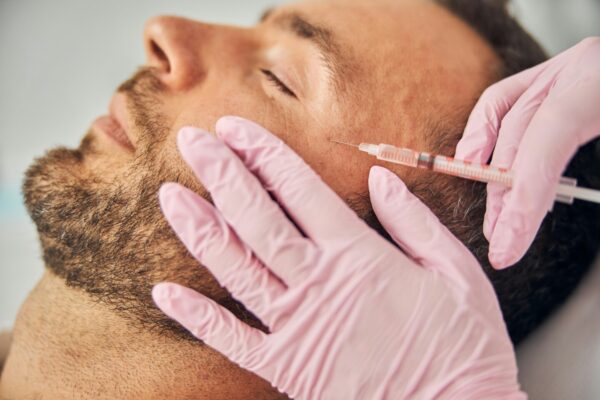
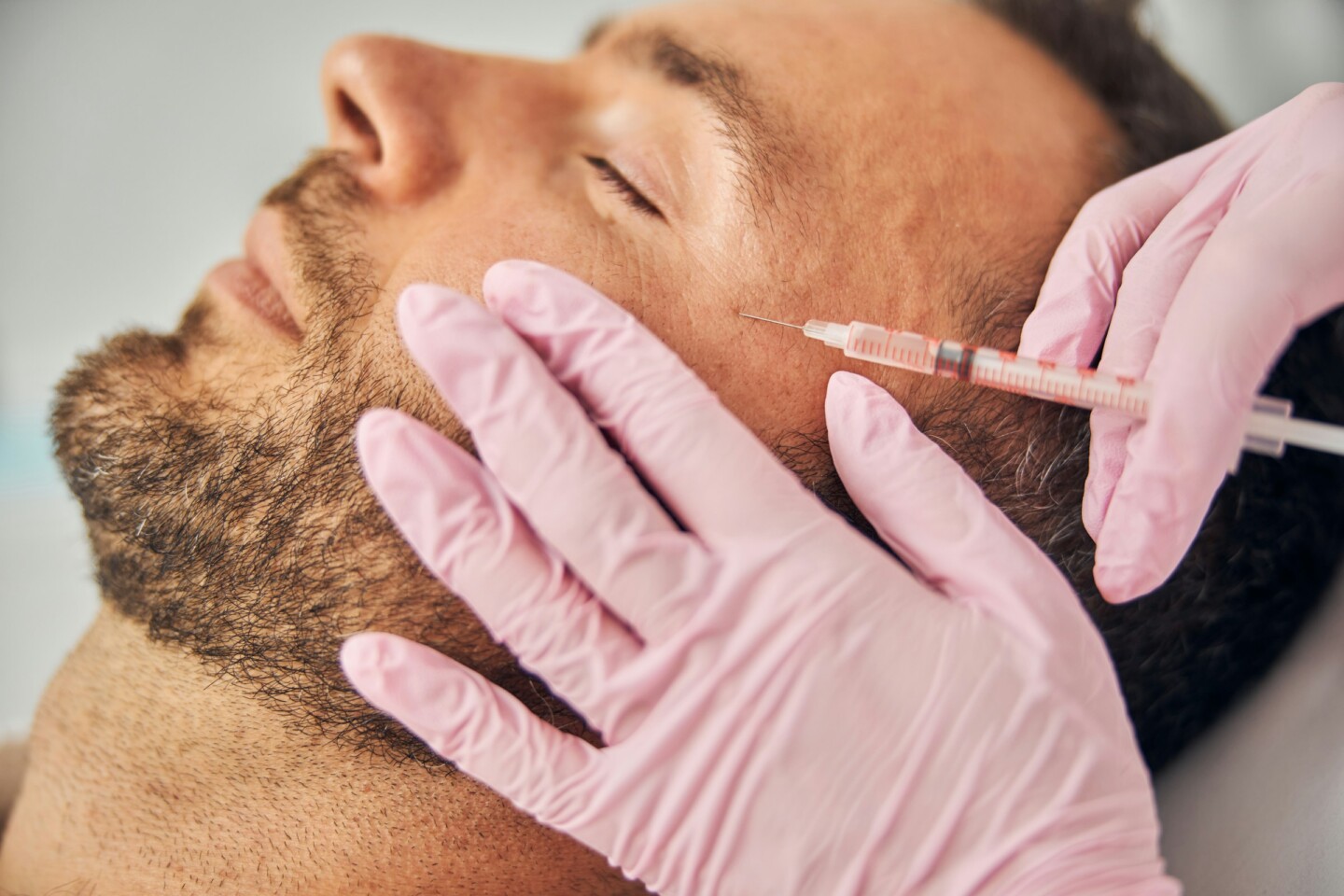
Tear trough filler is primarily used to address volume loss beneath the eyes. As the tissues in this area change with age, the transition between the lower eyelid and upper cheek can become more pronounced, which creates a hollow appearance and the shadows that often make the eyes look tired. Hyaluronic acid (HA) dermal filler can add volume to the area, helping to soften this transition and create a smoother contour.
This makes filler most appropriate when structural hollowing is a significant part of the patient’s presentation. It’s less suited to concerns that are primarily related to thin, crepey skin, fine lines, or pigmentation, as these won’t necessarily be corrected by adding volume.
What polynucleotides address instead
Polynucleotides take a different approach to under-eye rejuvenation. Rather than replacing lost volume, they’re used to support skin quality, with the aim of improving hydration, elasticity, and the appearance of fine lines over time. This makes them particularly relevant when the skin itself is the main concern, rather than a pronounced structural hollow.
Under-eye skin can become thinner and more crepey with age, which can make fine lines and changes in texture more noticeable. In these cases, a regenerative treatment could be more appropriate than simply adding volume. Polynucleotides can also be considered where patients have concerns around the overall quality and appearance of the skin, although practitioners should assess each case individually and set realistic expectations about what treatment can achieve.
Comparing risk and complication profile
Risk is an important part of the decision when considering which under-eye treatment to train in. The tear trough is a particularly delicate anatomical area, so dermal filler requires a strong understanding of facial anatomy, appropriate patient selection, and careful injection technique. Potential complications include vascular occlusion, the Tyndall effect, and filler migration, and some complications require prompt recognition and appropriate management.
The consequences of an issue can also be more significant with filler because the treatment involves introducing a volumising product into an anatomically complex area. This is why training shouldn’t focus solely on how to achieve an aesthetic result. Practitioners also need to understand relevant anatomy, contraindications, complications, and what to do if something doesn’t go as planned.
Polynucleotides have a different risk profile because they aren’t being used to create the same degree of structural volume. They don’t carry the same filler-specific concerns, but this doesn’t mean there is no risk. Injection-based treatments can still cause adverse reactions or local effects, and practitioners need appropriate training in assessment, product use, injection technique, and complication management.
Ultimately, a lower-risk profile doesn’t make one treatment universally better. Polynucleotides can be a useful option for improving skin quality, but they can’t provide the same degree of correction where significant structural hollowing is the primary concern. The patient’s anatomy, presentation, expectations, and suitability should all inform the treatment decision.
Longevity, cost and treatment planning
The difference between filler and polynucleotides also affects how practitioners plan treatment and discuss costs with patients. Tear trough filler is generally approached as a single treatment, with results lasting for a variable period depending on factors such as the product used, the individual patient, and how the treatment area responds. Patients should therefore be given realistic expectations rather than a fixed promise about longevity.
Polynucleotides follow a different treatment model. They’re typically delivered as a course of treatments, and improvements develop progressively rather than appearing immediately after one appointment. The number and spacing of sessions should follow the specific product protocol and the patient’s individual needs.
For a practice, these differences have practical implications. A filler appointment might involve a higher upfront treatment cost for the patient, followed by a longer interval before further treatment is considered. A polynucleotide protocol can involve several appointments, so the overall cost needs to be discussed in the context of the full course rather than the price of an individual session.
This can also affect how practitioners structure their services. Patients comparing tear trough filler or polynucleotides need to understand what they’re paying for, how the treatment is expected to progress, and when they might need further appointments. Clear consultations and transparent pricing can help ensure expectations are realistic from the outset.
Combining the two approaches
For some patients, the choice doesn’t have to be strictly between tear trough filler and polynucleotides. Once a practitioner is appropriately trained in both treatments, there may be cases where addressing skin quality and structural volume forms part of a broader treatment plan.
For example, a patient with some degree of volume loss alongside thin or crepey under-eye skin could benefit from an approach that considers both concerns. Polynucleotides could be used to support skin quality, and filler might be considered where genuine structural hollowing remains appropriate to treat. In some treatment plans, improving skin quality before considering filler might also be appropriate.
However, combining treatments shouldn’t be viewed as a default approach or a way to unnecessarily add treatments. Each option needs a clear clinical rationale, and patient suitability remains the starting point. Practitioners should assess the anatomy, skin quality, concerns, expectations, and overall treatment history before recommending a combination.
For clinicians, training in both can broaden the range of treatment options they can consider. The value lies in being able to distinguish between different presentations and select the most appropriate approach, rather than treating every under-eye concern in the same way.
Deciding which to train in first
If you’re thinking about which treatment you want to train in and offer, the answer should start with your patients. Look at the concerns you’re seeing most often, the age and needs of your patient base, and the treatments they’re already asking about. If structural under-eye hollowing is a common concern, dermal filler training may be particularly relevant. If patients are more focused on skin quality, fine lines, or a crepey appearance, polynucleotide training could be a useful addition to your skillset.
Your existing experience should also play a part. Consider the injectable treatments you’re already trained and confident in, how comfortable you are assessing facial anatomy, and which area of your clinical practice you want to develop next. You can also look at local demand and how a new treatment would fit alongside the services you already offer.
There’s no need to view the decision as choosing one treatment for your practice indefinitely. As your experience develops, training in complementary modalities can give you more options when assessing different patient presentations. The important thing is to build your skills progressively, with appropriate education, supervised practical experience, and a clear understanding of patient selection and safety.
Explore aesthetics training with Dr Bob Khanna Training Institute
Choosing between tear trough filler and polynucleotides starts with understanding what each treatment is designed to address, but developing the skills to deliver them safely requires the right training.
If you’re looking to expand your aesthetics practice, Dr Bob Khanna Training Institute offers training options covering both dermal fillers and polynucleotides, to help practitioners develop their knowledge and practical skills across different treatment approaches.
Explore the available aesthetics training courses to find an option that fits your experience and professional goals. If you’re unsure which pathway is right for you, contact us to discuss your training needs and find out more.